Dubai Municipality expects every salon, barbershop and beauty centre in the emirate to keep a set of documents on hand, sterilise tools in a set way, record a short health consultation with clients before specialised services, and look after its water and air. Those are the main points of its Technical Guidelines for Compliance of Salons, Barbershops and Beauty Centers (code DM-HSD-GU77-SBBCG2), version 5, issued on 26 March 2026 and replacing the version of 9 January 2025. We read it on 26 October 2026. This article walks through what it asks, in the order an owner would set things up.
Who it covers, and what changed in March 2026
The guideline applies to "all salons, barbershops, beauty centers, women's and men's salons, children's salons, mobile salons, and related activities in the Emirate of Dubai". It lists Dubai's Public Health Law No. 5 of 2025 and the 2007 executive regulations of Local Order No. 11 of 2003 as the legislation behind it.
The version history in the document says version 5 updated the name of the General Command of Dubai Civil Defence in two sections and rewrote the section on controlling the noise a business makes. That section now says, in full, that a salon must comply "with the permissible limits as determined by the relevant authorities in the emirate". The guideline does not state a decibel figure, so ask the municipality if your salon is next to homes.
Licences and the documents to keep ready
Three general rules open the requirements: you may only operate after getting the licences you need, every service must be an activity on your commercial or professional licence, and for non-surgical cosmetic services you "must refer to the Dubai Health Authority" for approvals and permits. Our separate article explains what DHA's cosmetic standard allows a salon to do.
The guideline lists the documents an owner must be able to show on request:
- the business licence;
- the no-objection certificate for health and safety activities on the approved floor plan;
- an up-to-date list of all employees;
- a valid professional health certificate for every service provider;
- professional certificates for workers who give specialised services;
- training certificates for staff using professional-use consumer products;
- an elevator safety certificate, accredited by the Emirates International Accreditation Center, if there is an elevator;
- a valid fire-prevention compliance certificate from Dubai Civil Defence;
- a record of shower-head cleaning and disinfection.
A salon in a building of its own needs more: contracts with Dubai Municipality-approved companies for water-tank cleaning, pest control and waste disposal, plus the water test reports and pest control records those contracts produce.
Hygiene rules on the salon floor
Staff must wear clean uniforms and shoes that cover the whole foot, and wash and sanitise their hands before and after each service. Workers with an injury or infection that could affect others should be given sick leave until they recover. The guideline also says not to:
- give medical advice or try to treat skin diseases;
- provide unauthorised medical services;
- give two services back to back that can damage the skin or hair (its example is hair removal followed by a Moroccan bath);
- wear metal jewellery while giving a service, or keep tools in bags or jackets;
- store customers' own tools and products at the salon;
- re-dip wooden sticks into wax, or re-dip hands and feet into the same paraffin wax from one customer to the next;
- use face and neck brushes after a haircut, or wash tools in the hair-wash sinks.
Single-use tools are thrown away straight after use. Water in steam devices for skin or hair is changed after each customer. Nobody may live at the premises, animals are not allowed, cooking is not allowed, and smoking or tobacco "in any form" is not allowed.
Sterilising tools: the equipment and the steps
The equipment list is specific:
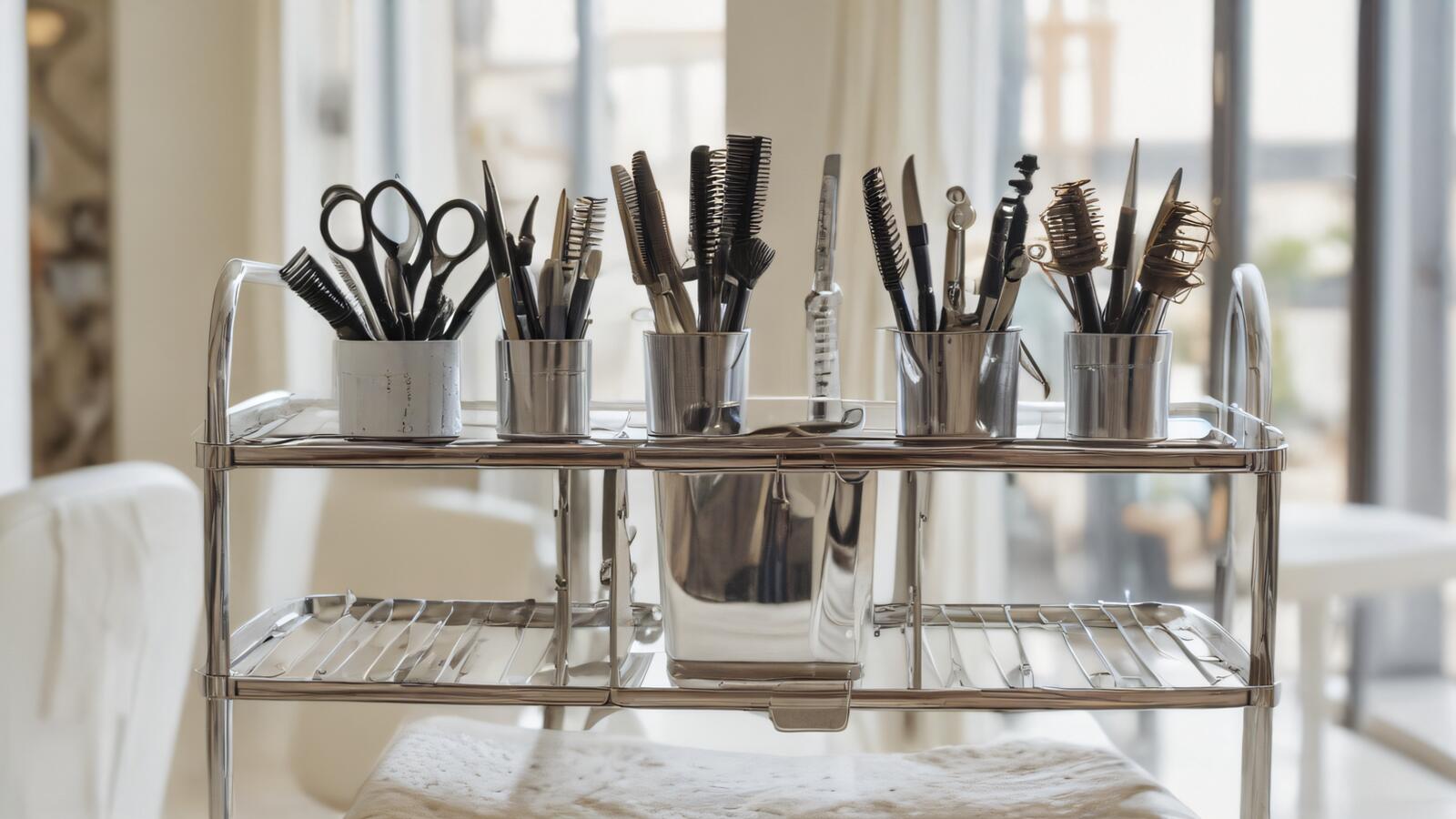
- an approved sterilisation solution and enough containers for it;
- ultraviolet sterilisers for hair cutting and styling tools, eyebrow tools and eyelash-extension tools, not overcrowded, with lamps changed as the manufacturer recommends;
- dry-heat or steam sterilisers, with time and temperature controls, for metal nail tools;
- a disinfectant for shaving machines and a cleaner for makeup brushes.
The steps for each customer's tools: wash with soap and water and brush, soak in the diluted solution for the time on the product label, rinse and dry, put them in their steriliser for the time in the device instructions, then keep them in a clean, closed place. Clippers have their heads removed, every part cleaned, and the parts sprayed with an approved disinfectant.
The client consultation record
Before a specialised service, the salon should ask the client a set of health questions about that service and document the answers, "in records or an electronic system", using the forms in the guideline's appendices. The definitions section explains the purpose: to check the client's safety before the service. A booking system that stores client notes can hold this record, as long as it captures what the appendix forms ask.
Safety, products and storage
Fire extinguishers must suit the business, be valid and be easy to reach. Emergency exits are marked and corridors kept clear. A first aid box follows the requirements of the Dubai Corporation for Ambulance Services. Hair-dryer filters are cleaned regularly. You may not change the approved layout without permission.
Salons with a steam room or sauna need a sign with safe-use instructions at the entrance, an emergency alarm linked to a staffed reception, enough light to see the exit, non-slip flooring and ventilation against mould.
Products must be approved, labelled to the UAE standard and in date. Mark the opening date on products whose shelf life counts from opening, keep containers covered, mix products as the product sheet says and throw away what is left after the service. Medicines may not be sold or handed out "by any means". In the storeroom, goods sit at least 20 cm off the floor and at least 50 cm below the ceiling.
Water and air
Every salon needs hot and cold water. Taps and shower heads are cleaned and disinfected at least once every three months, with a record kept. A salon in its own building also has its water system cleaned twice a year by an approved company and samples tested every quarter, including for Legionella. Drinking-water coolers are tested against the GSO 149-2021 standard.
For air, the guideline asks for monthly cleaning of air-conditioning filters, exhaust extraction where pollution is higher (its examples are nail and hair-dye areas), humidity kept between 30% and 60%, and no products that give off volatile organic compounds or formaldehyde. Salons in their own buildings have ducts cleaned at least every three years, and the guideline says mechanical ventilation should "preferably" bring in at least 15 cubic feet per minute of outdoor air per person.
A checklist to start with
- Are the licence, the health-and-safety no-objection certificate, the civil defence certificate and every worker's health certificate on file and in date?
- Is every service on the menu an activity on your licence, and does any of it need DHA approval?
- Do you have UV sterilisers for hair, brow and lash tools, and a dry-heat or steam steriliser for metal nail tools?
- Is there a written consultation record for each client before specialised services?
- Is the three-monthly shower-head and tap disinfection recorded?
- Are opening dates on opened products, and is the storeroom 20 cm off the floor?
This is a summary of one Dubai Municipality guideline, not legal advice. Inspectors work from the full document and from other municipality guides it refers to, so check the current version on Dubai Municipality's site before an inspection, and ask the municipality where your case differs.
BRev Digital builds online booking for salons and spas, including Hajz; see brevdigital.com.